
جارٍ التحميل…
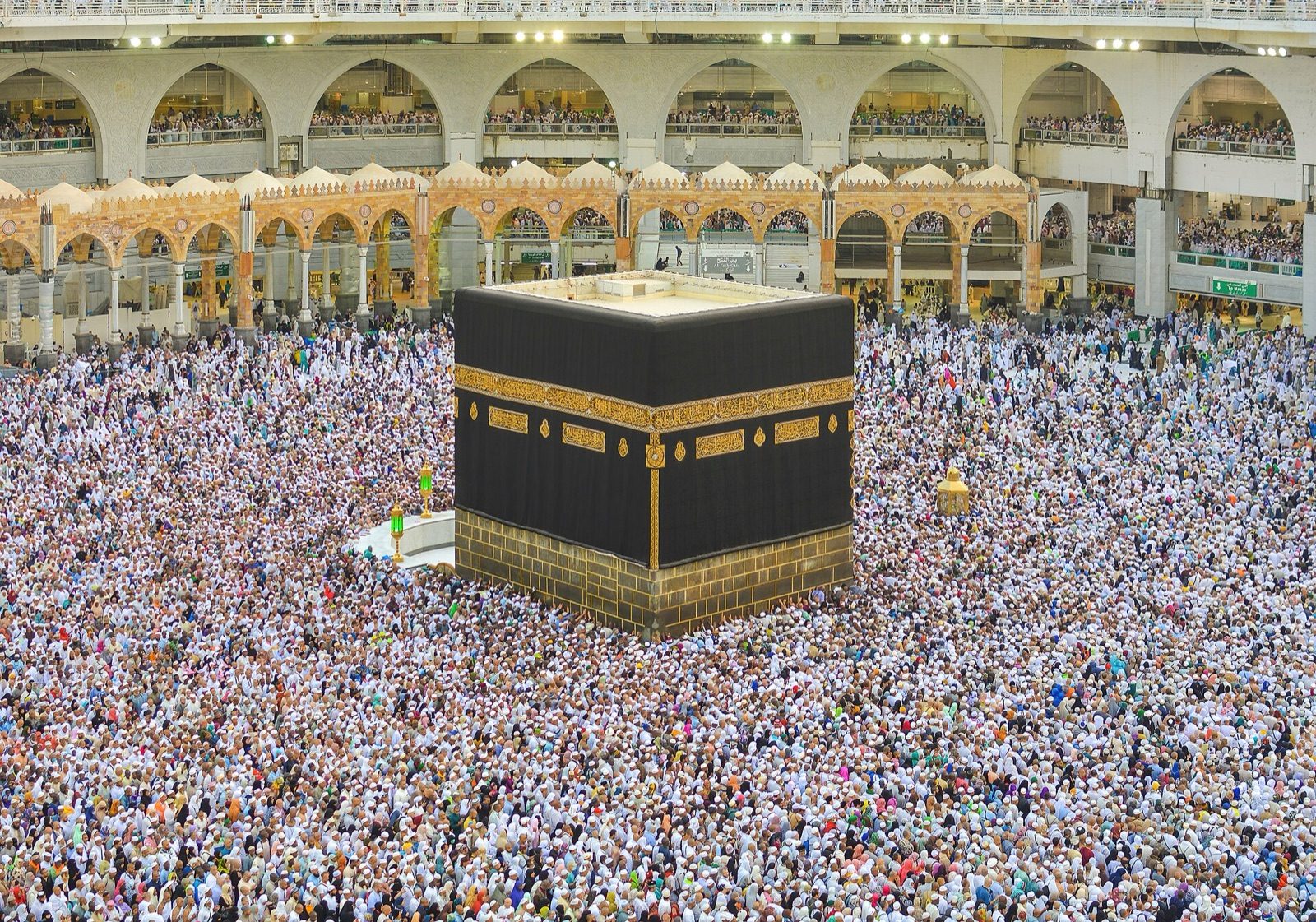
The Sacred House of Allah — the first house set up for mankind and the qibla of the Muslims in every corner of the earth. Its foundations were raised by Ibrāhīm and Ismāʿīl (peace be upon them) by their Lord's command. Allah made it a sanctuary and a place of safety — whoever enters it is secure. The Black Stone embedded in its corner is received by pilgrims following the Prophet's ﷺ Sunnah, and beside it stands the Station of Ibrāhīm where he stood while building the House. The Prophet ﷺ purified it on the Day of the Conquest of Makka of three hundred and sixty idols. Each year Muslims make Ḥajj to it, answering the call Ibrāhīm the Khalīl (peace be upon him) proclaimed to the world.
📷 Photo: Adli Wahid — Wikimedia Commons — CC BY-SA 4.0
Last reviewed: 19 November 2026
09-06-1448 Jumādá al-ākhirah 1448 AH · 19-11-2026
Umm al-Qura method · Riyadh time
🔊 Audio tour
Listen to a tour of The Noble Kaʿba
Professional AI voice
✦ Quranic verses are never AI-narrated — hear the recitation in the Verses section from a certified reciter.
﴿إِنَّ أَوَّلَ بَيْتٍ وُضِعَ لِلنَّاسِ لَلَّذِي بِبَكَّةَ مُبَارَكًا وَهُدًى لِّلْعَالَمِينَ فِيهِ آيَاتٌ بَيِّنَاتٌ مَّقَامُ إِبْرَاهِيمَ ۖ وَمَن دَخَلَهُ كَانَ آمِنًا﴾﴿وَإِذْ جَعَلْنَا الْبَيْتَ مَثَابَةً لِّلنَّاسِ وَأَمْنًا وَاتَّخِذُوا مِن مَّقَامِ إِبْرَاهِيمَ مُصَلًّى ۖ وَعَهِدْنَا إِلَىٰ إِبْرَاهِيمَ وَإِسْمَاعِيلَ أَن طَهِّرَا بَيْتِيَ لِلطَّائِفِينَ وَالْعَاكِفِينَ وَالرُّكَّعِ السُّجُودِ﴾﴿وَأَذِّن فِي النَّاسِ بِالْحَجِّ يَأْتُوكَ رِجَالًا وَعَلَىٰ كُلِّ ضَامِرٍ يَأْتِينَ مِن كُلِّ فَجٍّ عَمِيقٍ﴾«يَا رَسُولَ اللَّهِ، أَيُّ مَسْجِدٍ وُضِعَ فِي الْأَرْضِ أَوَّلَ؟ قَالَ: الْمَسْجِدُ الْحَرَامُ. قُلْتُ: ثُمَّ أَيٌّ؟ قَالَ: الْمَسْجِدُ الْأَقْصَى. قُلْتُ: كَمْ كَانَ بَيْنَهُمَا؟ قَالَ: أَرْبَعُونَ سَنَةً.»Abū Dharr (may Allah be pleased with him) asked the Prophet ﷺ: "Which mosque was built on earth first?" He said: "Al-Masjid al-Ḥarām." I asked: "Then which?" He said: "Al-Masjid al-Aqṣā." I asked: "How much time between them?" He said: "Forty years."
«وَاللَّهِ، إِنِّي لَأَعْلَمُ أَنَّكَ حَجَرٌ، لَا تَضُرُّ وَلَا تَنْفَعُ، وَلَوْلَا أَنِّي رَأَيْتُ رَسُولَ اللَّهِ ﷺ يُقَبِّلُكَ، مَا قَبَّلْتُكَ.»ʿUmar ibn al-Khaṭṭāb (may Allah be pleased with him) said as he kissed the Black Stone: "By Allah, I know that you are only a stone that cannot harm or benefit; and had I not seen the Messenger of Allah ﷺ kissing you, I would not have kissed you." A firm statement of tawḥīd: following the Prophet, not seeking blessing from stone.
«دَخَلَ النَّبِيُّ ﷺ مَكَّةَ، وَحَوْلَ الْبَيْتِ ثَلَاثُ مِئَةٍ وَسِتُّونَ نُصُبًا، فَجَعَلَ يَطْعُنُهَا بِعُودٍ فِي يَدِهِ وَيَقُولُ: ﴿جَاءَ الْحَقُّ وَزَهَقَ الْبَاطِلُ ۚ إِنَّ الْبَاطِلَ كَانَ زَهُوقًا﴾.»When the Prophet ﷺ entered Makka on the Day of the Conquest — three hundred and sixty idols were around the Kaʿba — he struck them with a stick in his hand saying: {Truth has come, and falsehood has perished — indeed falsehood is bound to perish} [al-Isrāʾ 81]. And the idols fell on their faces.
«مَنْ طَافَ بِهَذَا الْبَيْتِ أُسْبُوعًا فَأَحْصَاهُ، كَانَ كَعِتْقِ رَقَبَةٍ، لَا يَضَعُ قَدَمًا وَلَا يَرْفَعُ أُخْرَى إِلَّا حَطَّ اللَّهُ عَنْهُ بِهَا خَطِيئَةً، وَكُتِبَ لَهُ بِهَا حَسَنَةٌ.»Whoever circumambulates this House seven times, counting them, is as one who freed a slave — he does not put a foot down nor lift another save that Allah erases a sin by it and writes him a good deed.
✦ Explore the details
⚠️ Content in this section is under scholar review. Always consult the cited sources.
Prophetic ﷺ practices to revive here — a simple checklist for when you're standing in the place itself.
Start each lap aligned with the Black Stone, saying "Allāhu akbar" and pointing to it with your right hand if you cannot touch it. Keep the Kaʿba on your left.
In the arrival ṭawāf for men: do raml — brisk short steps with shoulders moving — in the first three laps, and walk the last four. The Prophet ﷺ did this to show the Quraysh his companions' strength (Bukhārī & Muslim).
Between the Yemeni Corner and the Black Stone recite: "Our Lord, grant us good in this world and good in the Hereafter, and protect us from the Fire." The Prophet ﷺ said it often here (Abū Dāwūd, declared ṣaḥīḥ by al-Nawawī).
After the seven laps pray two rakʿahs behind the Station of Ibrāhīm if you can — otherwise anywhere in the Masjid al-Ḥarām. Recite Sūrat al-Kāfirūn in the first and al-Ikhlāṣ in the second.
After the two rakʿahs drink Zamzam facing the qibla in three breaths, saying "Bismillāh" at the start and "al-ḥamdu lillāh" at the end. The Prophet ﷺ said: "Zamzam is for whatever it is drunk for" (Ibn Mājah, ṣaḥīḥ al-Albānī).
When leaving in the farewell ṭawāf, touch the Black Stone if you can — otherwise point to it. It is your parting with the House. Do not walk out backward: leaving in reverse is not Sunnah.
🎒 What to bring
A gentle reminder — Islamic adab at these places.
Do not rub the Kaʿba's wall or kiswa seeking blessing. Touching is prescribed only for the Black Stone and the Yemeni Corner — in following the Sunnah, not seeking blessing from the stone itself, as ʿUmar (may Allah be pleased with him) made clear.
Do not supplicate the Kaʿba, nor call upon anyone beside Allah near it. The House is a qibla — faced, not worshipped. All supplication is to Allah alone, anywhere in the Masjid al-Ḥarām.
Do not shove to reach the Black Stone and harm others. If you cannot touch it calmly, point to it with your right hand and say takbīr — the Sunnah never conflicts with avoiding harm to Muslims.
Filming during ṭawāf distracts you and blocks others. Keep it to a minimum — ṭawāf is a moment of worship, not a content stage.
The Prophet ﷺ did not transmit a specific supplication for each lap of ṭawāf. Make dhikr and duʿāʾ freely in your own words — do not tie yourself to printed per-lap scripts that have no proof.
A menstruating woman's ṭawāf is not valid. Wait for purity, or shift saʿy forward if time allows — and consult scholars in difficult cases.
The Kaʿba is the first house established on earth for the worship of Allah. Its foundations were raised by Ibrāhīm and Ismāʿīl (peace be upon them). It is the qibla of Muslims in their prayer and the center of ṭawāf in Ḥajj and ʿUmrah.
Ibrāhīm and Ismāʿīl (peace be upon them) raised its foundations by Allah's command: {And when Ibrāhīm was raising the foundations of the House, with Ismāʿīl} [al-Baqarah 127]. It has been rebuilt several times — including by Quraysh in the Prophet's ﷺ lifetime before his mission.
A stone sent down from Paradise, set in the eastern corner of the Kaʿba. Pilgrims touch it following the Prophet's ﷺ Sunnah. ʿUmar (may Allah be pleased with him) said as he kissed it: 'By Allah, I know that you are only a stone that cannot harm or benefit; and had I not seen the Messenger of Allah ﷺ kissing you, I would not have kissed you' — removing any confusion between veneration and shirk.
The stone Ibrāhīm (peace be upon him) stood on while building the Kaʿba — still enclosed in glass facing the door of the Kaʿba. The Sunnah is to pray two rakʿahs behind it after completing the seven laps.
No. The Prophet ﷺ only touched the Black Stone and the Yemeni Corner — the first is touched and kissed, the second only touched. Rubbing anything else of the Kaʿba for blessing is a bidʿah (innovation).
Three hundred and sixty idols, which he struck down with a stick in his hand while reciting: {Truth has come, and falsehood has perished} (Ṣaḥīḥ al-Bukhārī 2478).
No, the Kaʿba is not opened to the general public under ordinary circumstances. It is opened on limited occasions for the ceremonial washing or for a few state visits. The interior is washed twice a year.
No, her ṭawāf is not valid until she becomes pure. In ʿUmrah she remains in iḥrām until she purifies and then completes her rites. Ḥajj has specific rulings for her — consult a scholar.